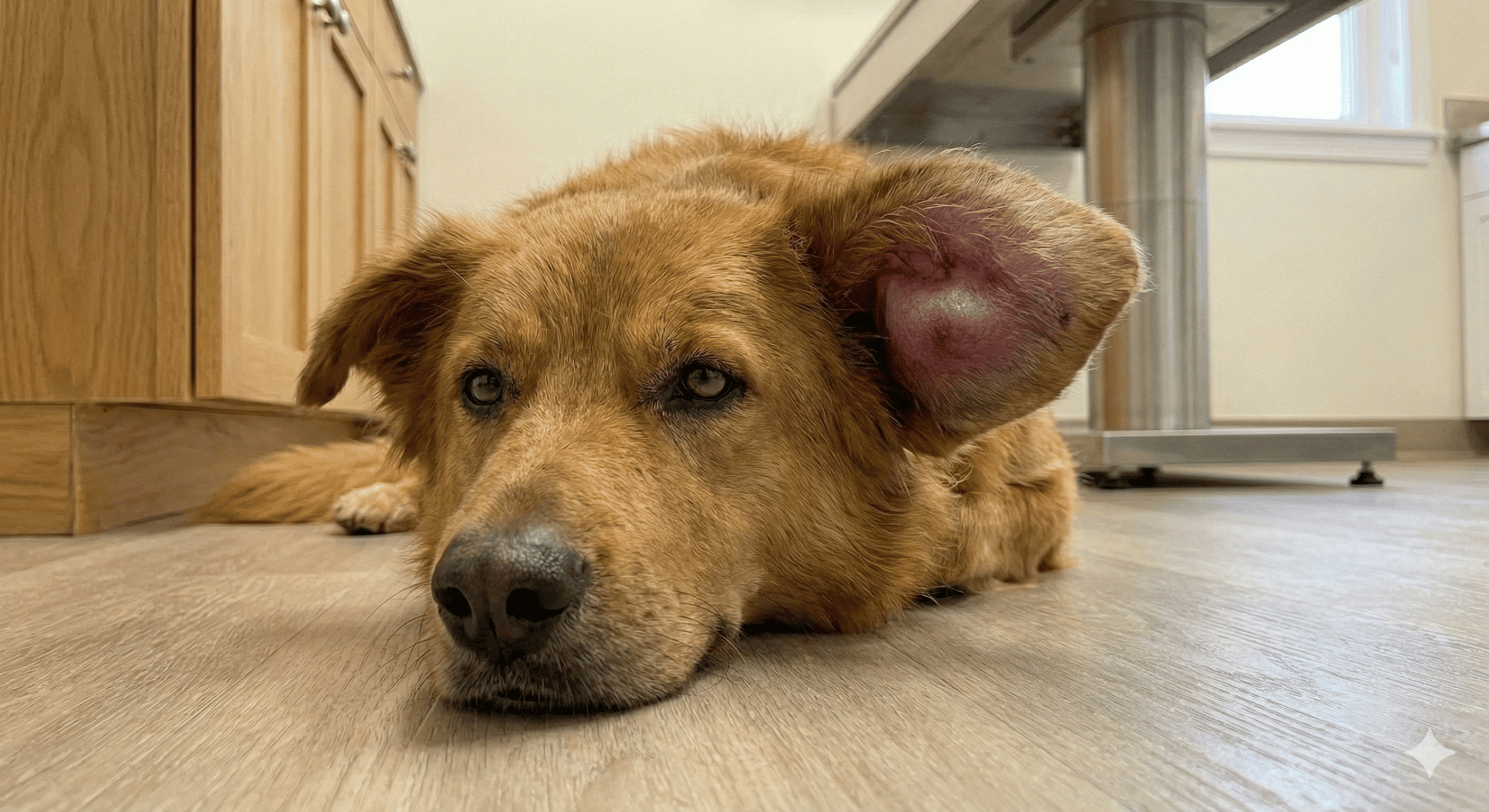

On December 7, 2025, a 6-year-old spayed female shepherd mix was brought to Ruby Veterinary Urgent Care with a swollen left ear. Her owners had noticed the swelling the night before. She had recently been to the groomer, but had no significant medical history or medications. At the time of presentation, the dog was bright, alert, and responsive. Her vital signs were normal. The physical exam revealed swelling and redness of the left ear (pinna) and mild debris in both ear canals.
Diagnosis and Underlying Cause
The patient was diagnosed with an aural hematoma, a condition where blood accumulates in the ear flap. This often results from head shaking or scratching that ruptures small blood vessels between the skin and cartilage. Common causes of aural hematomas include ear infections, allergies, ear mites, foreign bodies, or trauma. The swelling typically feels warm, puffy, and spongy to the touch. While draining the hematoma is important to prevent permanent ear deformity, treating the underlying cause is essential.
Diagnostic Workup and Initial Treatment
Both ears were examined thoroughly, and a cytology of the ear discharge was performed using the Idexx inVue Dx Cellular Analyzer. This in-clinic analyzer uses AI to deliver rapid, pathologist-level insights in about 10 minutes, helping guide treatment decisions. The dog was diagnosed with ear infections in both ears. Cytology revealed a combination of cocci bacteria and yeast. A single-dose, long-acting ear medication was administered. This treatment includes an antibacterial agent, an antifungal agent, and a steroid to reduce inflammation.
Hematoma Management and Follow-Up
With the underlying cause addressed, the team proceeded to treat the hematoma itself. Aural hematomas can be managed in several ways, including surgical repair, needle aspiration, teat cannula placement, or a conservative approach allowing the hematoma to resolve naturally. The owners opted for teat cannula placement following drainage of the hematoma. The procedure was performed under reversible sedation, and the dog was discharged the same day.
One week later, the patient returned to Ruby Vet due to continued swelling. The teat cannula, which was supposed to stay in place for at least three weeks, had prematurely dislodged. Because the hematoma had not fully resolved and the cannula site had closed, the team elected to repeat the procedure. The dog was sedated again, the pinna was drained, and a new cannula was placed. Additionally, a steroid was injected into the ear, and the patient was prescribed oral steroids to reduce inflammation and support healing.
Final Outcome
Another week later, the dog was evaluated by her primary care veterinarian due to concern about ongoing swelling. At that time, the cannula was intact but no longer draining, and the pinna had hardened due to scar tissue. The hematoma had resolved, so the cannula was removed. Some redness and debris remained near the ear canal, so a second dose of long-acting ear medication was administered, and the oral steroid course was continued.
Despite some setbacks, the dog experienced a successful outcome and full resolution of her aural hematoma. While complications and uncertainties are a part of veterinary medicine, this case serves as a reminder of the importance of persistence, follow-up care, and collaboration between pet owners and veterinary professionals.
Ruby Vet Can Diagnose and Treat Ear Issues
If you notice your pet shaking their head, scratching at their ears, or developing sudden ear swelling, don’t wait as these could be signs of an aural hematoma or an underlying ear infection. At Ruby Veterinary Urgent Care, our experienced team is here to provide prompt, compassionate care and advanced diagnostics to help your pet feel better fast. Whether it’s a swollen ear or something more serious, we’re ready when you need us.