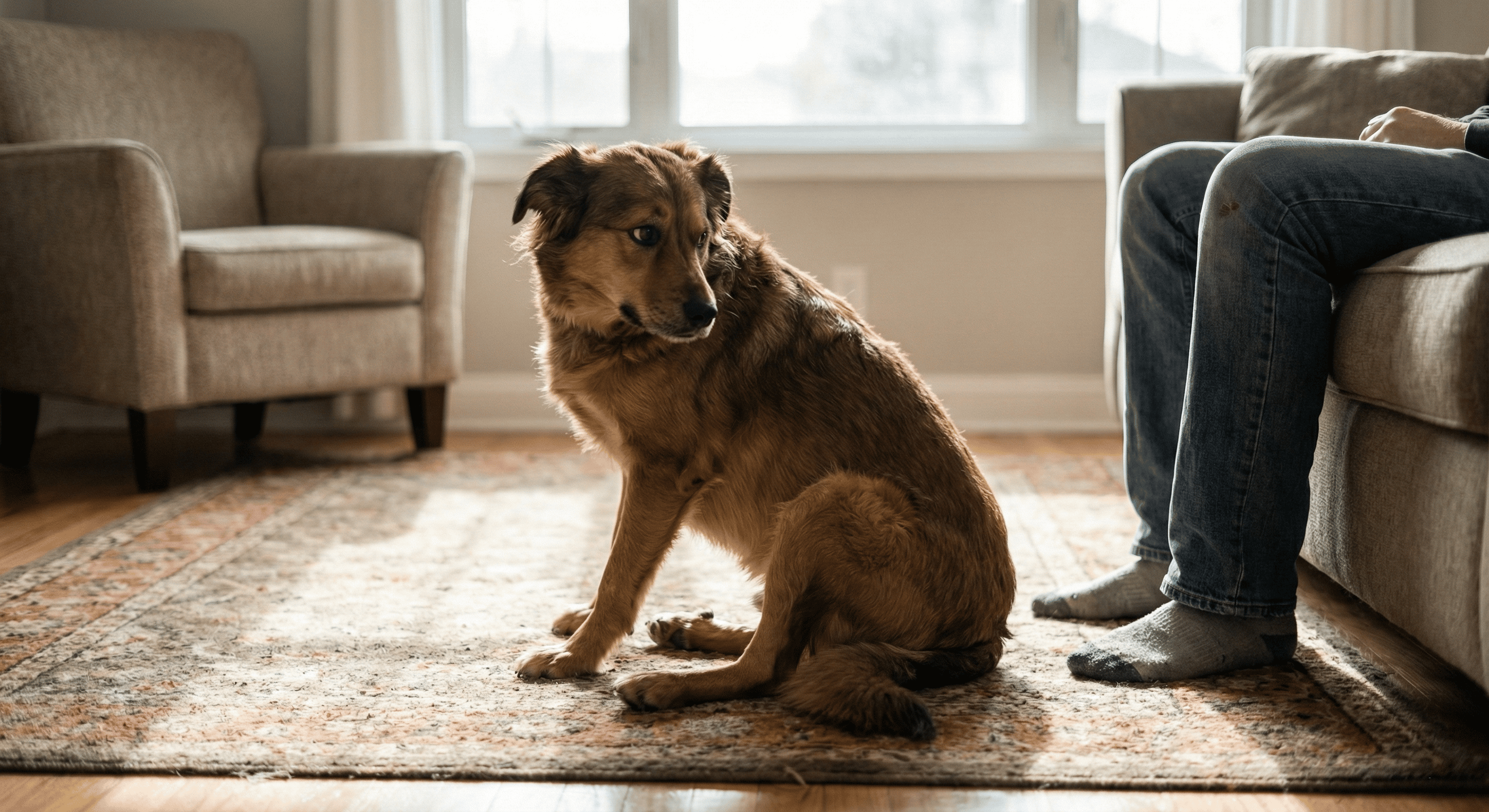

If you have ever seen your dog suddenly drag their rear end across the carpet, lawn, or, unfortunately, your favorite rug, you are not alone. While often seen as an awkward or humorous behavior, bottom scooting usually indicates that something in that area is itchy, irritated, or uncomfortable. While it can occasionally be harmless, scooting is frequently your dog’s way of communicating that something is not quite right.
Below, we break down the most common reasons dogs scoot and how to know when it is time to call your veterinarian.
Anal Gland Issues: The Most Common Culprit
Anal glands are two small sacs located just inside your dog’s anus. These glands normally empty on their own during bowel movements; however, they sometimes fail to express properly. When they do not empty, the sacs can become full, impacted, or even infected.
Symptoms of anal gland issues include:
- Scooting and dragging the rear.
- Itching or burning sensations.
- Excessive licking of the rear end.
- A strong, fishy odor.
If left untreated, impacted glands can develop into painful abscesses. If an abscess occurs, a veterinarian must lance and drain it, typically followed by a course of antibiotics and pain medication. Dogs with frequent issues may benefit from manual expression by a veterinarian or dietary changes if the root cause is linked to food or environmental allergies.
For a deeper dive into this topic, read our blog: The Stinky Truth: Understanding and Managing Anal Glands in Pets.
Intestinal Parasites
Worms, specifically tapeworms, can cause significant irritation around the anus, leading to scooting. Owners may notice small, rice-like segments near the rectum or in the dog's stool.
Other signs of a tapeworm infection include:
- Weight loss despite maintaining a good appetite.
- Diarrhea or soft stools. Regular fecal exams and routine deworming are essential to preventing parasite-related discomfort.
Food and Environmental Allergies
Dogs suffering from allergies often experience itchy skin across their entire body, including the rear end. These reactions can be triggered by specific proteins or ingredients in food, or environmental factors like pollen, grasses, molds, and dust mites.
In these cases, scooting is often accompanied by other symptoms such as ear infections, paw licking, or generalized itching. Managing these cases typically requires a combination of diet trials, medication, and environmental control.
Learn more in the first part of our series: Scratching the Itch: Understanding Allergies In Your Pets.
Fleas (Even a Single Bite Matters)
Fleas tend to bite around the tail base and rear end. For sensitive dogs, even a single flea bite can trigger intense itching.
Look for these signs of flea activity:
- Sudden itching or scooting near the tail.
- Hair loss or scabs at the base of the tail.
- Visible fleas or "flea dirt" (small black specks) in the fur. The easiest way to eliminate this cause is through year-round flea prevention.
Other Potential Causes
Scooting isn’t always related to glands or parasites. Other physical irritants can prompt a dog to "scratch the itch" by scooting:
- Grooming Issues: Matted fur or fecal matter stuck around the anus.
- Skin Problems: Localized skin infections, rectal irritation, or small wounds.
- Medical Conditions: Perianal fistulas.
- Conformation: Physical structure issues, which are more common in small or overweight dogs.
Why Is My Dog Scooting After Pooping?
This is one of the most common contexts for scooting and one of the most misread. A dog that scoots immediately after a bowel movement is usually responding to incomplete anal gland expression. Under normal circumstances, the pressure of passing stool naturally squeezes the anal sacs and releases their contents. When stools are too soft, too small, or the glands are already overfull, that natural emptying doesn't fully happen. Your dog feels the residual pressure and tries to relieve it the only way they know how.
Less commonly, post-poop scooting can simply mean there's fecal residue clinging to the fur around the anus, particularly in dogs with longer coats. A quick visual check can rule this out.
If your dog scoots after most bowel movements over the course of several days, the anal glands likely need professional attention. A veterinarian can express them manually and assess whether a dietary adjustments, like increasing fiber to produce firmer stools, could help the glands empty more effectively on their own going forward.
Why Is My Dog Still Scooting After Anal Glands Were Expressed?
If the scooting continues after a gland expression, it usually means one of two things: the glands weren't the only issue, or they weren't the issue at all.
Residual irritation. Glands that were significantly full or mildly impacted can leave the surrounding tissue inflamed even after expression. This soreness may take a day or two to subside, and your dog may continue to scoot during that window. If scooting resolves within 48 hours of the expression, inflammation was likely the culprit.
An underlying cause is still active. Allergies — both food and environmental — are the most common reason for persistent scooting after expression. Allergic inflammation affects the skin around the anus and can cause the glands to fill more rapidly than normal, creating a cycle where expression provides only temporary relief. Flea allergy dermatitis, skin infections, and less common conditions like perianal fistulas can also produce ongoing irritation that mimics or coexists with anal gland problems.
If your dog is still scooting more than two days after expression, or if they need expressions more frequently than every few weeks, a follow-up visit is warranted. Your veterinarian can look beyond the glands to identify what's driving the recurring discomfort.
Can Diarrhea Cause Dog Scooting?
Yes, and the connection is twofold. First, diarrhea itself irritates the skin around the anus. Repeated exposure to loose, acidic stool can cause redness, rawness, and discomfort — prompting your dog to scoot in response to the irritation.
Second, loose stools don't generate enough pressure against the anal glands during defecation. Over the course of a few days of diarrhea, the glands can become progressively fuller without their normal outlet for expression. Once the diarrhea resolves, the dog may continue scooting because the gland issue remains.
A short bout of diarrhea lasting one to two days that resolves on its own may lead to temporary scooting that clears up as the stool firms and the skin heals. But if your dog's diarrhea lasts more than 48 hours, is accompanied by vomiting or lethargy, or the scooting persists after stools return to normal, a veterinary visit can address both the digestive issue and the gland buildup before either worsens.
When Should You See the Vet?
While occasional scooting may happen, frequent or persistent behavior is not normal. You should schedule a veterinary visit immediately if:
- The scooting happens repeatedly.
- Your dog appears lethargic or in pain.
- You notice swelling, discharge, or a foul odor.
- Scooting is paired with vomiting, diarrhea, or weight loss.
Early intervention can prevent minor irritation from escalating into a painful medical problem.
The Bottom Line
Scooting is your dog’s way of saying, “Hey, something back here doesn’t feel right”. Whether the cause is anal gland trouble, allergies, or parasites, most cases are highly treatable once identified. If your dog is struggling with discomfort, Ruby Veterinary Urgent Care can help them get back to feeling their best – and keep your carpets safe in the process!