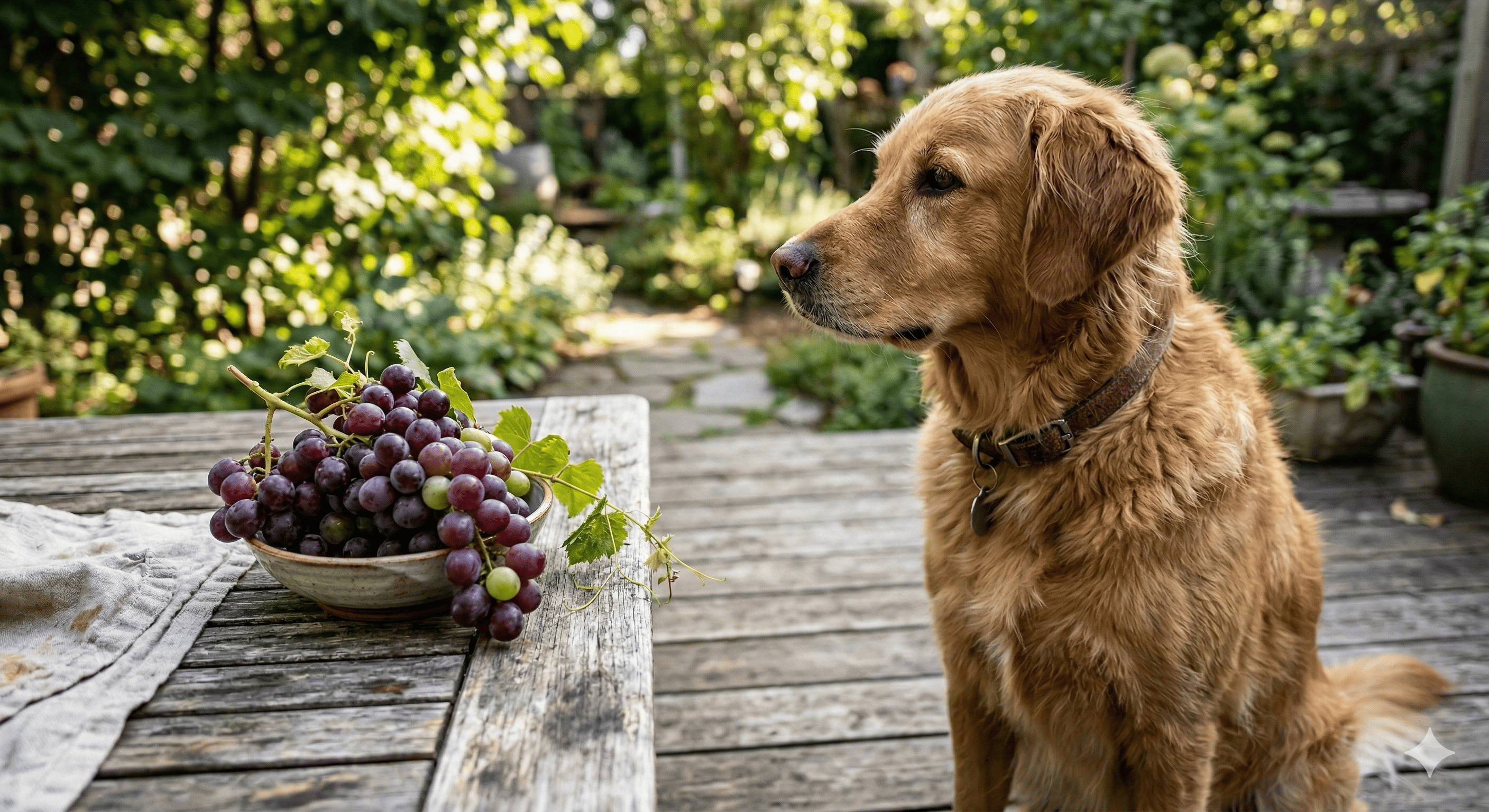

It’s one of the most common emergency calls we receive: “My dog just ate a grape; what should I do?”
Recently, we treated a dog who had swallowed a single grape. Because the ingestion had just occurred, we safely induced vomiting and successfully recovered the grape. Acting quickly made all the difference.
But why is a simple grape such a big concern for dogs?
Why Are Grapes and Raisins Dangerous?
Grapes and raisins can cause acute kidney injury (AKI) in dogs. For many years, the exact toxic component was unknown. Research now suggests that tartaric acid (and its salt form, potassium bitartrate) is the primary toxic compound responsible for kidney damage in susceptible dogs. The challenge? Not all grapes contain the same concentration of tartaric acid, and not all dogs respond the same way. That means:
- Even one grape can potentially cause serious illness.
- Some dogs may eat several grapes and show no symptoms.
- There is no reliable way to predict sensitivity. Because of this unpredictability, every grape or raisin ingestion is treated seriously.
What Is the Toxic Dose?
There is no completely “safe” amount, but reported risk guidelines include:
- Grapes: As little as ~10–30 grams per kilogram (g/kg) of body weight
- Raisins: As little as ~3 g/kg For perspective:
- A single grape weighs about 4–5 grams.
- Small dogs are at much higher risk from even one grape.
- Raisins are more concentrated and therefore more dangerous gram-for-gram. However, kidney failure has been reported at doses lower than these estimates. Because of this, we do not recommend a “wait and see” approach.
What Happens in the Body?
Tartaric acid appears to damage the kidneys, specifically the renal tubules. This can lead to:
- Vomiting (often within 6–12 hours)
- Lethargy
- Decreased appetite
- Increased or decreased urination
- Abdominal pain
- Elevated kidney values (BUN and creatinine)
- In severe cases, complete kidney failure Kidney injury can develop within 24–72 hours after ingestion.
What We Did: Inducing Vomiting
In our recent case, the dog had eaten the grape just before arrival. Because it was early, we induced vomiting in a controlled hospital setting and successfully retrieved the grape. Why is this important? If the grape is removed before digestion:
- Absorption of tartaric acid is minimized
- The risk of kidney injury drops significantly
- Hospitalization time may be reduced
Never attempt to induce vomiting at home without veterinary guidance. Some methods are dangerous and can cause more harm than good.
Standard Treatment Recommendations
Treatment depends on timing and dose, but may include:
1. Immediate Decontamination
- Induce vomiting to try to remove as many grapes as possible Tartaric acid delays gastric emptying so it is worth inducing vomiting even if several hours have passed since ingestion.
- Administer activated charcoal to reduce toxin absorption
2. Bloodwork
Baseline kidney values (BUN, creatinine, SDMA) are performed at the time of presentation, followed by repeat bloodwork every 24 hours for 2 days minimum to monitor for any changes to the kidneys secondary to the ingestion. If kidney values elevate during this time, continued fluid therapy and monitoring is recommended until, hopefully, kidney values normalize or stabilize.
3. IV Fluid Therapy
If a significant amount was ingested or if we’re uncertain, dogs are often hospitalized on IV fluid therapy for a minimum of 48 hours while we monitor their kidney function. Early fluid therapy dramatically improves outcomes.
4. Monitoring at Home
If ingestion was minimal and vomiting was successful, we may:
- Administer fluids under the skin at the time of initial presentation, and possibly continue daily subcutaneous fluids for 24-48 hours post
- Recheck kidney values in 24–48 hours
- Monitor appetite, energy, and urination closely
Prognosis
- Excellent if treated early and kidney values remain normal.
- Guarded to poor if kidney failure develops.
- Dogs that become anuric (stop producing urine) have a much more serious prognosis and may require dialysis.
Are Grapes or Raisins Toxic to Cats?
This is a common and important question. Unlike dogs, grape and raisin toxicity has not been well documented in cats, and confirmed cases of kidney failure in cats from grape ingestion are extremely rare. However:
- The exact mechanism of toxicity (tartaric acid) could theoretically affect cats.
- Cats are generally less likely to eat grapes or raisins voluntarily.
- There is not enough research to declare grapes “safe” for cats. Because of this uncertainty, veterinary professionals still recommend:
- Treating grape or raisin ingestion in cats cautiously
- Contacting a veterinarian promptly
- Monitoring kidney values if a significant amount was consumed In short: we don’t see toxicity in cats the way we do in dogs, but grapes are still not recommended for feline diets.
What About Wine Made From Grapes? Is That Toxic?
Interestingly, wine does not appear to cause the same kidney toxicity seen with grape ingestion. The fermentation process changes the chemical composition, and tartaric acid levels are not typically associated with kidney injury in wine exposures. However, wine presents a different concern: alcohol toxicity.
Ethanol (Alcohol) Toxicity
Wine contains ethanol, which is toxic to both dogs and cats. Even small amounts can cause:
- Vomiting
- Disorientation
- Loss of coordination
- Low blood sugar
- Low body temperature
- Respiratory depression
- In severe cases, coma
Pets are far more sensitive to alcohol than people, and alcohol toxicity can be life-threatening in pets
Bottom Line on Wine:
- Yes, wine is toxic to dogs and cats.
- The danger comes primarily from alcohol, not kidney failure.
- Any ingestion should prompt a call to your veterinarian.
Key Takeaways for Pet Owners
- Grapes and raisins are never safe for dogs.
- Even one grape can be a problem.
- Early intervention is critical.
- If your dog eats grapes or raisins, call your veterinarian or an emergency clinic immediately. When it comes to grape ingestion, it’s always better to act fast than to wait and hope for the best. If you have questions about potential toxin exposure, Ruby Veterinary Urgent Care is here to help.